Catastrophic Urbanisation
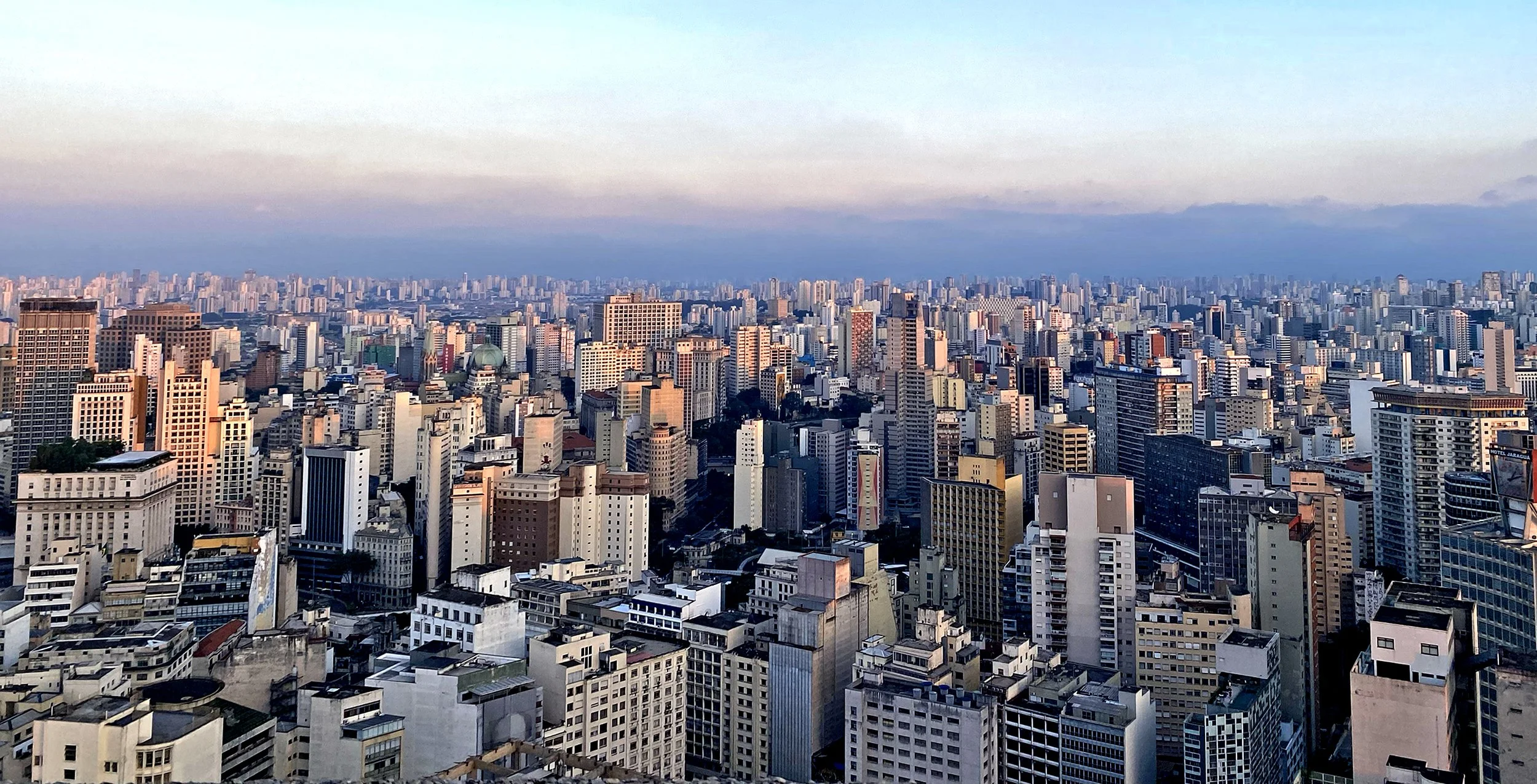
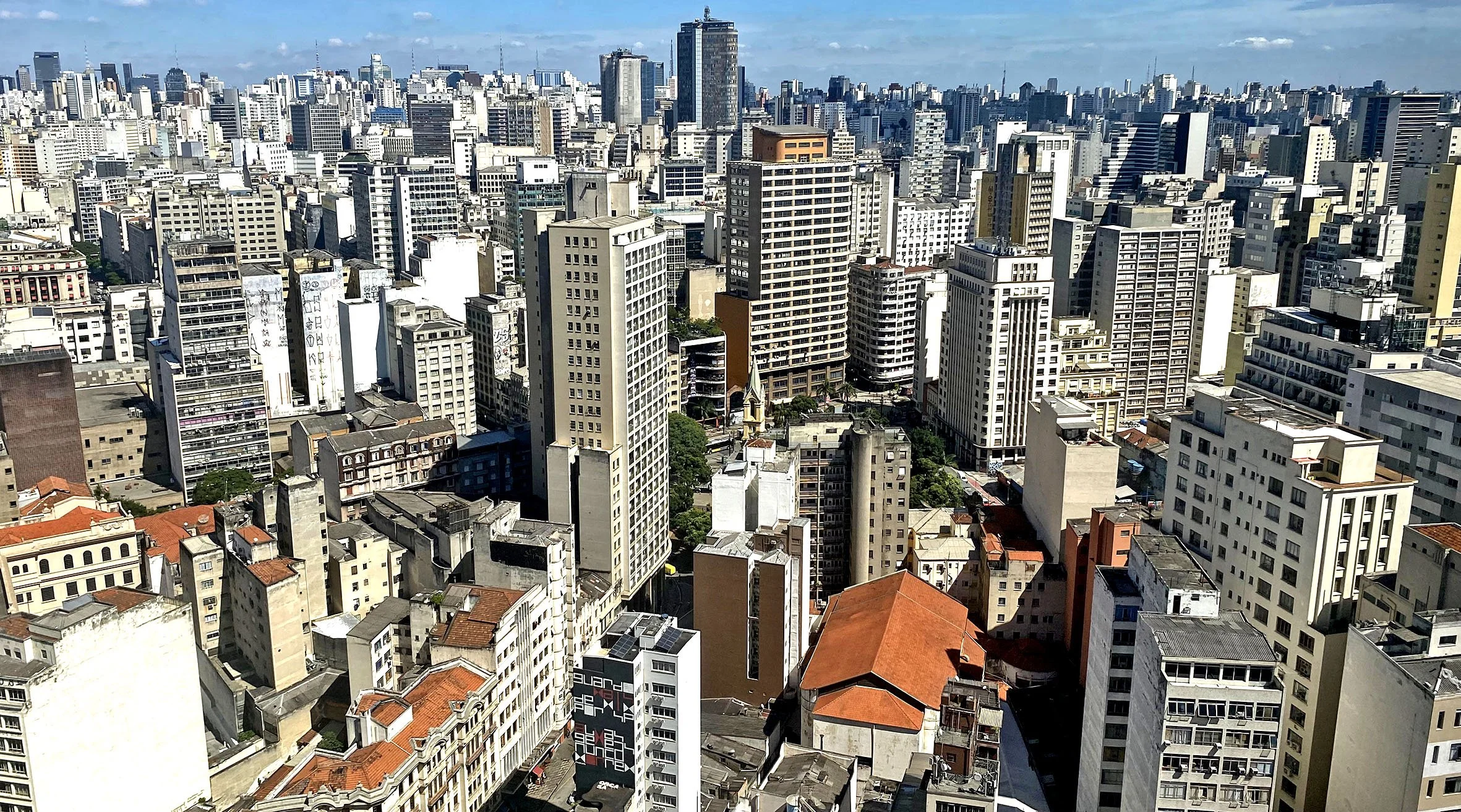
When I stare out across the mega city, it is not urban progress that unfolds before me, but a looming apocalypse. The violent insanity of capitalist urbanisation reaches the tipping point as social and environmental disintegration spirals out of control in an end of time death march. It is a scenario well-rehearsed in contemporary Brazilian literature. In Ruy Tapioca’s, Admiravel Brasil Novo (2001), a fascist theocracy governs the country and biogas barges traverse Rio’s baia de Guanabara to harvest the methane that rises from what is now a waste filled toxic swamp. Meanwhile, in Ignácio de Loyola Brandão’s, Não Verás país Nenhum (1996), São Paulo has entered a state of complete atrophy. Daily temperatures exceed 45 degrees. Urine is recycled for drinking water. Social infrastructure collapses and migrant populations are herded into warehouses to await their end. Similar narratives play out in Bernardo Kucinski’s, A Nova Ordem (2019). The teaching of sociology, philosophy, literature and history is abolished and replaced by creationism. All National Parks are dismantled, and Brazil’s oil reserves and mineral resources are auctioned off to the highest bidder. I have probably spent too much time reading dystopian novels. The reason is simple enough. At their best they offer incisive critiques of the world we live in with a creativity and imagination that is often lacking in conventional academic histories. Partly inspired by the Strugatsky Brother’s Hard to be a God (1964), in which an undercover galactic communist Don Rumata documents daily life in a book burning feudal society, one of my own fictional characters is that of an alien anthropologist, a graduate from the Inter Galactic Institute of Anthropological Research who visits earth. Below is a translation from the preface of his doctoral thesis on planetary instability. “ Our collective research has shown quite conclusively that one of the hallmarks of an advanced civilisation is the equitable distribution of resources. At a certain point in a planet’s history, a consensus is finally reached that the immiseration of large swathes of a world’s population ultimately threatens the lives of everyone. Not so, or at least not yet, on Earth. Despite the tragedies of its history in which the species has repeatedly stood on the verge of extinction, it resolutely refuses to acknowledge the underlying reasons for its precarious existence. Rival political elites continue to fight over access to the planet’s riches and jealously monopolise food and energy. Like an all-powerful assassin the principles of economic competition and legalised robbery hunt down the merest whiff of cooperation and the gift. In a remarkable abandonment of reason, patterns of behaviour such as these, are held to be the authentic character of human nature. To deny the self-evident logic of self-interest, or to advocate the collective ownership of land is tantamount to treason. So it is that on a daily basis, new migrants arrive on the periphery beyond the periphery of City X, the vague fuzzy margin that moves forever outwards, and unfolds into the ragged curvature of the horizon. There, exiled, where land meets sky, the poorest of the poor scavenge a home from the clutter they brought with them and the debris left behind from those that came before. The census office vainly tries to keep abreast of the pace of expansion, but precise population figures are virtually impossible to ascertain. My own calculations suggest a figure of somewhere in the region of three hundred million, most of whom dwell in a diseased landscape that detailed chlorophyll scans indicate is bereft of plant life. The belt of woodland and network of waterways that once provided oxygen and moisture vanished long ago. Air reeks of decomposition, water tastes acidic, and biological mutations from radioactive trace elements are common. If this was not enough, lack of nutrition and low levels of literacy make the impoverished population especially vulnerable to psychological manipulation. Overall, it is estimated that life expectancy in these peripheral settlements is less than half that in elite residential neighbourhoods. It is a radical disjuncture in the quality of life that is neither inevitable nor necessary. There seems little doubt that the origins of these threats to biological and ecological reproduction lie in the human conceptualisation of nature as an external object, a commodity that like any other exists to be bought, sold and profited from. Whilst this is not unique to Earth, the extent to which this culture of extreme commerce has become universalised, and like a second nature synonymous with social being, sets Earth apart from other planets. One of the consequences is that humans find it difficult to imagine with any sustained clarity how to organise society in a qualitatively different way. It has not always been so and it might well be that it is forced to radically reassess its priorities. From my experience, this is only likely to happen if the prosperity of well-to-do citizens in the new city is under threat. Even then there is no guarantee. They live in permanent fear of the creeping mysteries of the wastelands and are terrified of invasive proletarian born infections. However, rather than address the structural causes of urban and ecological instability, they prefer to discuss the benefits of sonic barriers, force fields, translucent screens and other exclusionary mechanisms. That this is ultimately self-defeating and will do nothing to address environmental degradation, counts for little. The surreal and destructive character of human attitudes to nature permeates all aspects of its political and economic life. Remarkably, planet earth excels in five of the eight main causes of planetary instability; uncontrolled super-urbanisation; the violation of fragile eco-systems: profiteering resource extraction; the rapacious industrialisation of agriculture; and perpetual military conflagration. One of the many consequences of this triumph of anti-nature is the fact that virtually the entire population of City X under the age of sixty has no direct experience of the joy and proven psychological benefits of flora and fauna. This is by any measure a disturbing situation.”