New Town Epitaph
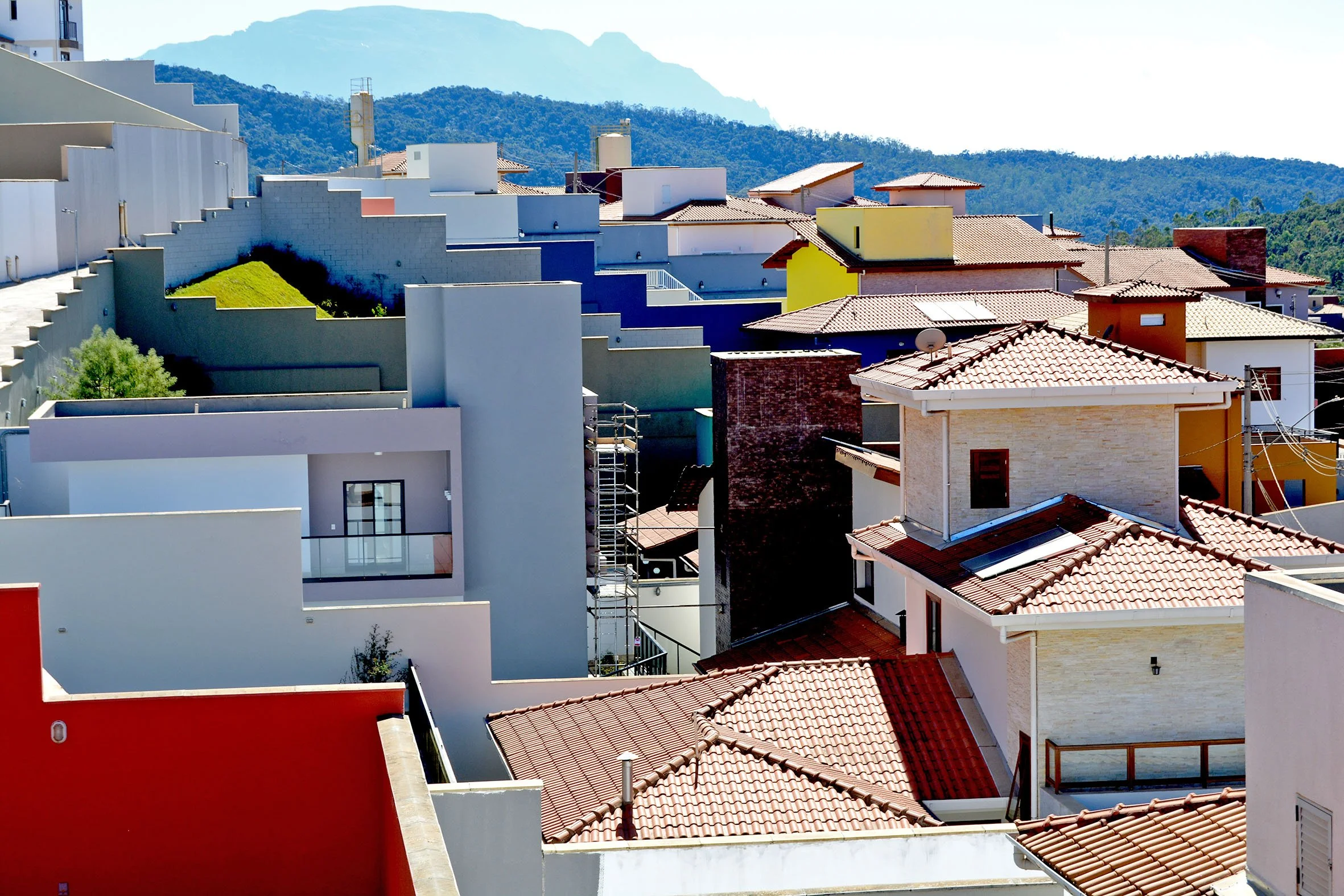
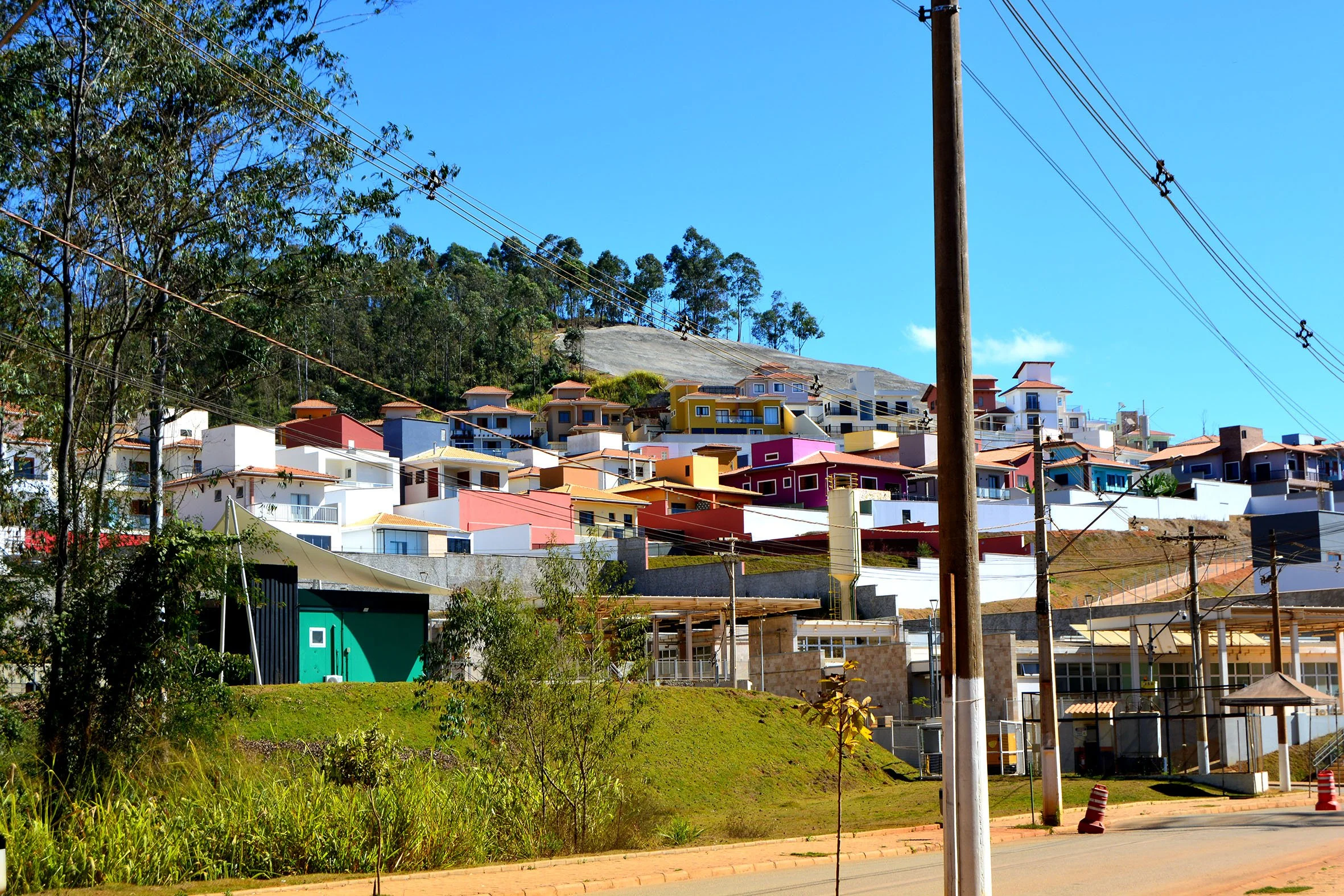
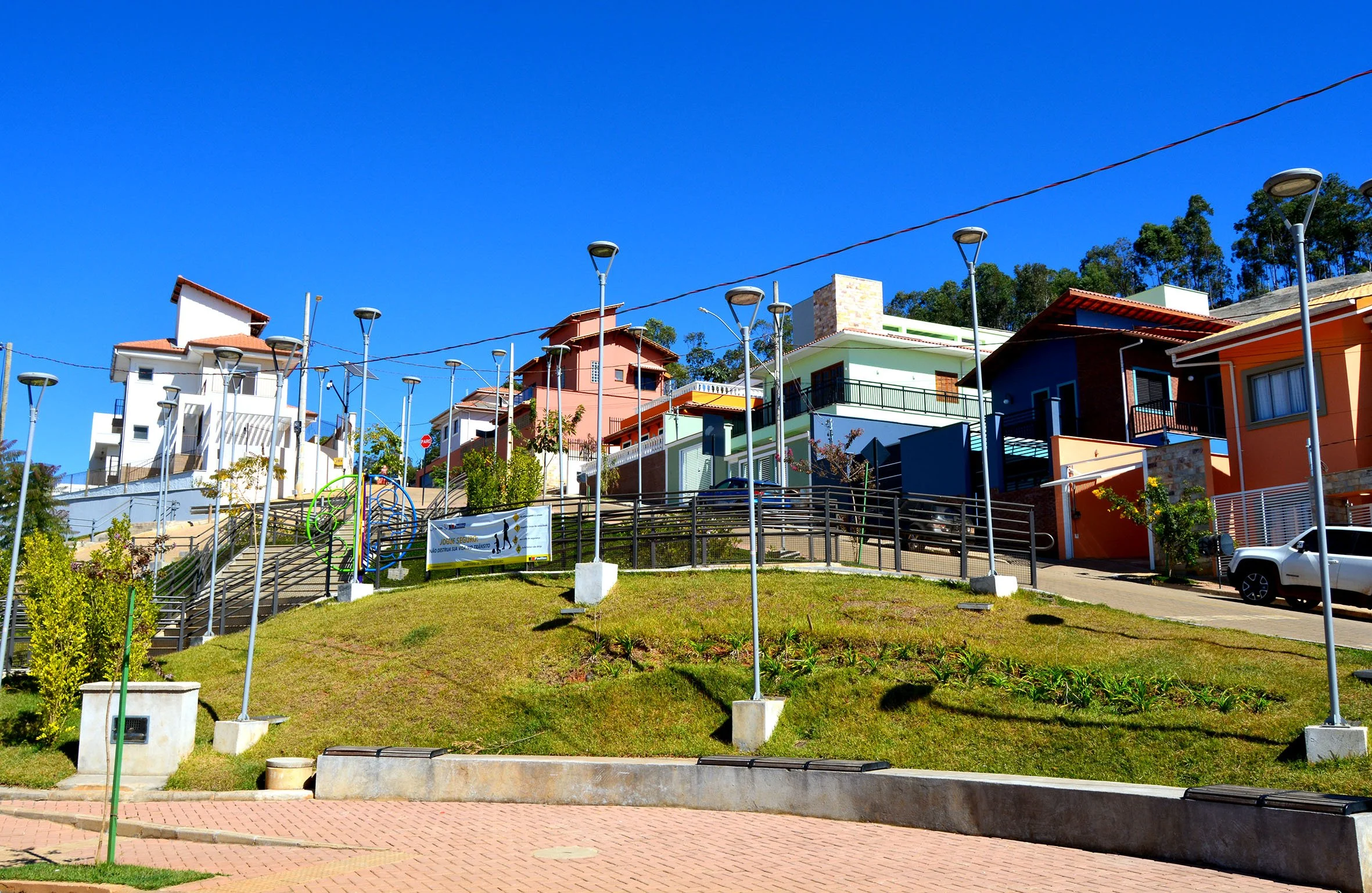
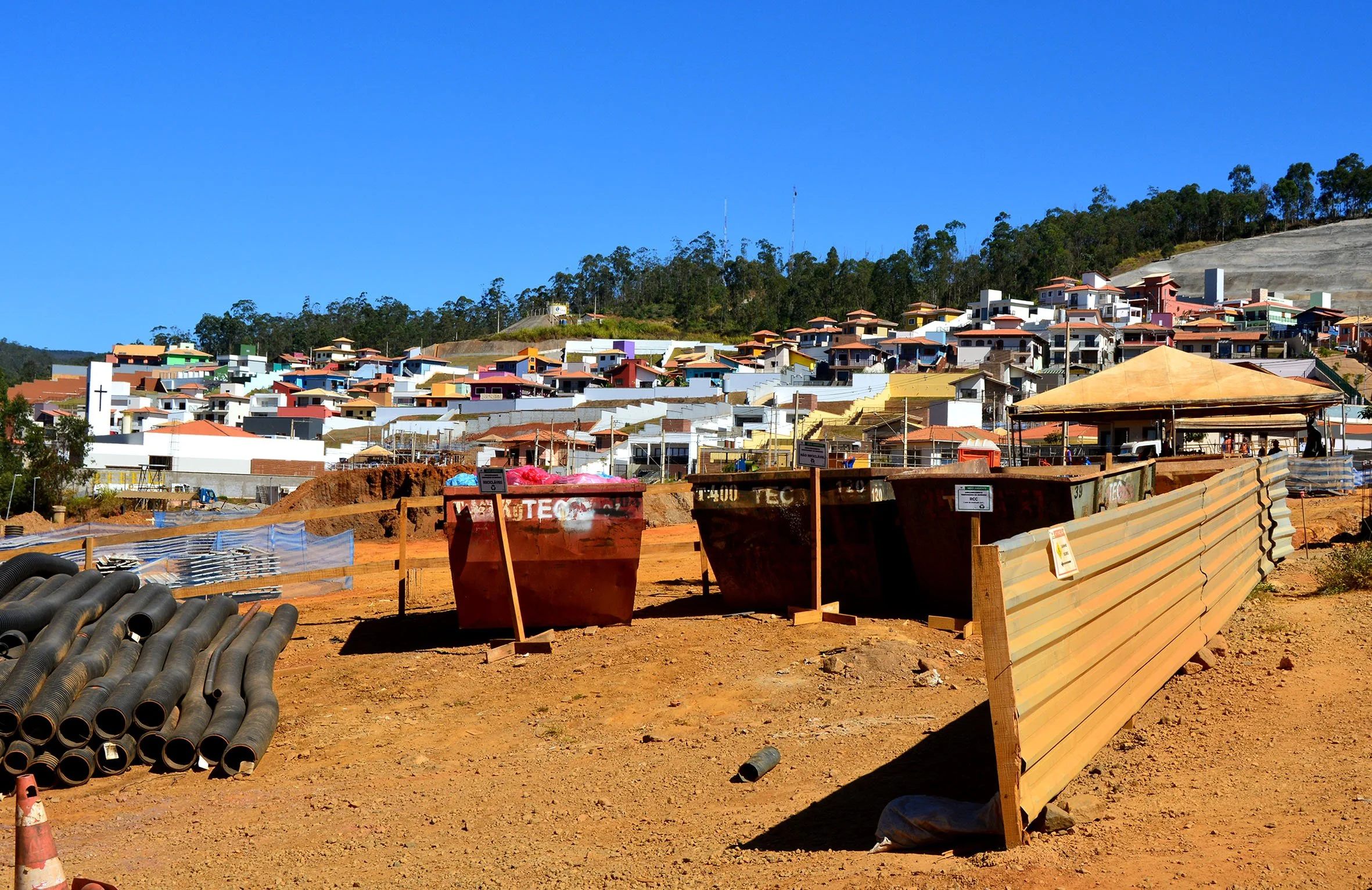
Like an unhinged Mediterranean tourist town on LSD, Novo Bento Rodrigues tumbles down the steep hillside in a riotous visual cacophony of terracotta tile and multicoloured render. Organised through the ostensibly ‘independent not-for profit’ Fundação Renova, it will one day be ‘home’, along with its sister village Novo Paracatu, to the two hundred families made homeless by the 2015 Mariana tailings dam collapse. Condemned for their criminal negligence that led to one of the worst environmental disasters in Brazil’s history, the mining companies have engaged in a fierce battle to restore their reputations and have so far spent an estimated one billion reais on the projected new towns. Still under construction, the partially inhabited streets are eerily quiet on the day that I visit. The low afternoon sun casts warm lilac, blue, and pink shadows over the well-built homes that vaguely reference bungalow Americana, the country ranch, and the modernist villa. With comprehensive social infrastructure that includes a pristine church, community centre, health clinic, school and playground, it is unlike any Brazilian neighbourhood I have ever seen, as if an alien blueprint for an ‘ideal town for ideal families’ has somehow slipped through a wormhole and landed in the woods of Minas Gerais. No doubt when fully inhabited, nostalgia for the past fades, and the patina of a new way of living is inscribed on the clean polished surfaces, it will feel very different. But as I walk up and down the steep interconnecting staircases, hemmed in on both sides by high concrete walls, I begin to feel increasingly uneasy about this strange fragment of manufactured paradise. Despite the superficial appearance of a well implemented urban plan, the Fundação stands accused of being a mouthpiece for the corporate interests of mining companies and for being insensitive to the historical complexity of social life in communities that live at one with the natural world. This is evident in a number of ways. Glaringly absent from the new town is the quintal, the epi-centre of rural culture, both as a place to grow crops and as the beating heart of the social reproduction of family and community life. Absent too are freshwater springs to drink from, a river to fish in, and a ‘home’ for the forno a lenha, the domestic icon of mineiro cooking. Such omissions are symptomatic of a deeper failure to understand the informal, intimate, and permeable spatial structure of traditional villages. In old Bento Rodriguez and Paracatu, the distinction between private and public was blurred, edges were soft, and fences were there to contain animals rather than to declare ‘private property.’ In marked contrast, Novo Bento Rodriguez is rigid, hard, and steeped in the real estate vocabulary of defensible space. Gates, barriers, and brooding walls divide the new town into ready for sale fortified plots. It is an urban phenomenon that is tragically universal, a long, drawn-out process in which the last traces of free social exchange and organic collective space are slowly eradicated.
(This is the latest in a series of blogs about the mining industry in Brasil. For related entries see Mining Giant on Trial, Technological Deformations, Terra Forming, Ruin Porn in Paracatu, Extraplanetary Mining and more…)